Celebrating 30 years as the nation’s most experienced developer of spine & orthopedic centers of excellence.
- 817-481-2450
- Contact Us
-

Marketing
Personal Websites
Should a spine surgeon or joint replacement surgeon have a personal web site in addition to their presence in a group practice or hospital web site?
By Bob Reznik, MBA
President of Prizm Development, Inc.,
The most experienced developer of spine centers of excellence in the United States for over 30 years
Prizm is often asked by spine surgeons and joint replacement surgeons if they should have a personal web site. They may ask that question because they wonder if it may be redundant to their hospital’s web site or their presence in a group practice web site?
Here are 9 relevant considerations and if a personal website can create patient flow and surgical cases:
1. A web presence is like a lighted beacon that never turns off
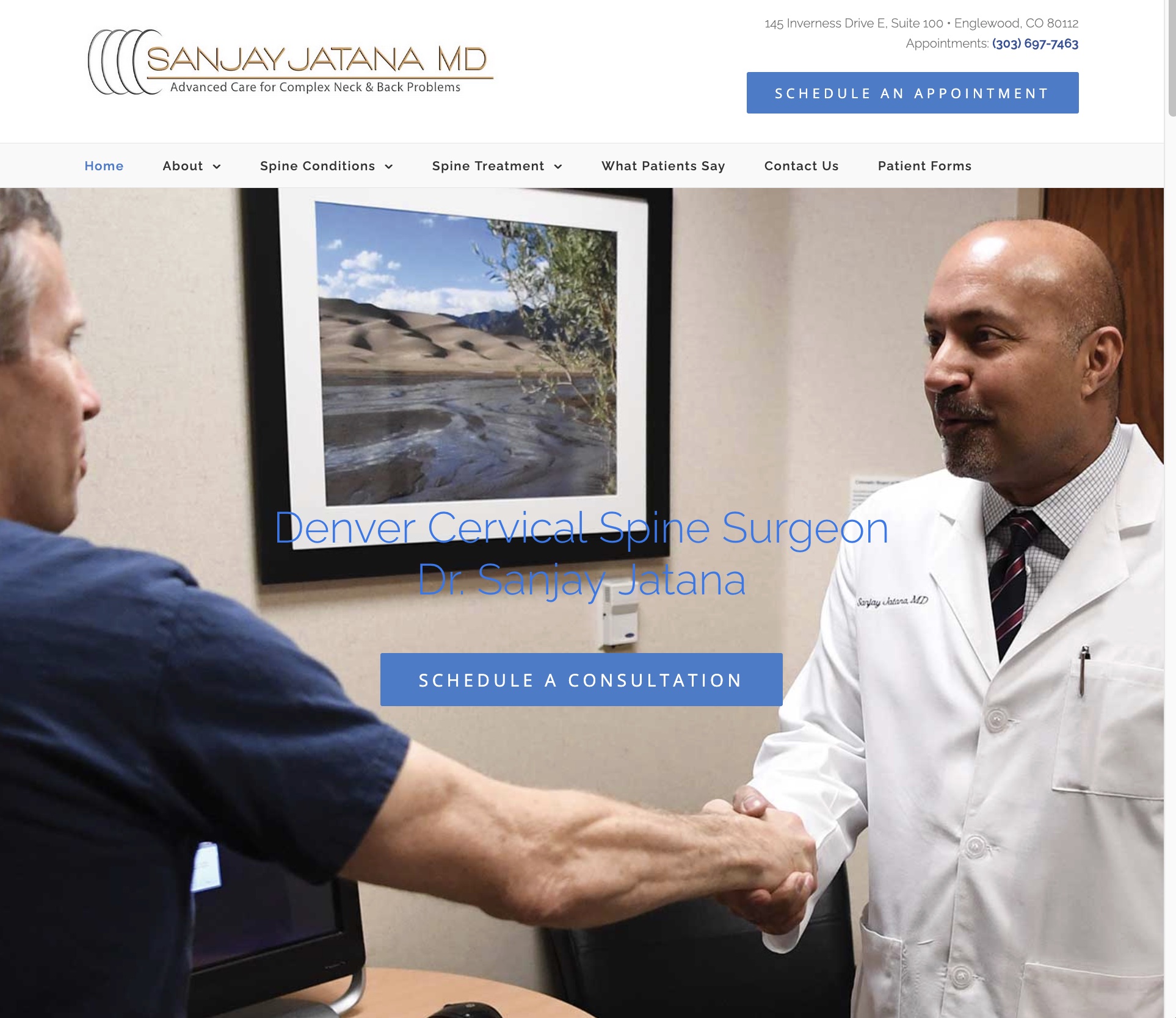
The first thing we say to this question is that a personal web site is the most economical promotion tool of all time, because it’s working for you like a lighted beacon that is on 24 hours a day, 365 days a year — for no extra cost. If your site has educational content about what symptoms mean, possible conditions and treatment options, that personal web site will be like a lighthouse, acting as a tractor beam for the person who is looking for a specialist in their city or state, and clicks into your site and finds what they were looking for.
Secondly, unlike all other methods of promotion, a personal web site for a physician communicates to people in the nearby zip code or across the planet to someone in Hong Kong doing a search for certain expertise — all for the same small monthly server hosting cost.

2. Hospital web sites promote a building or health system, not a surgeon
The second thing we explain is that a hospital web site is intended to promote the hospital or health care system “brand,” not a surgeon. At best, a hospital web site may have a page for an orthopedic department, neuroscience department or perhaps even a spine center. However, rarely do these web pages feature more than a list of surgeons in that department with staff privileges. Hospitals are careful NOT to endorse or promote a specific surgeon over another in the hospital.
Typically a hospital has a listing of doctors in a hard-to-use “find a doctor” search box. This is of zero help to the person who is looking for a spine surgeon who is proficient in artificial disc replacement, or a joint surgeon who is proficient with knee, hip or shoulder replacement. The prospective patient then quickly jettisons out of that worthless type of site and back to Google to find a surgeon or specialist with their own web site.
The important reason why hospitals don’t promote an individual doctor is because it’s politically explosive. The more the hospital favors one surgeon the more it alienates another surgeon who is on staff. And because the name of the hospital game is filling the surgical suite and beds, all surgeons play a role. So the safest way to avoid upsetting all the surgeons in a particular specialty or niche is to promote no individual surgeon capabilities.
3. Group practice web sites can be handcuffed by the same favoritism issue
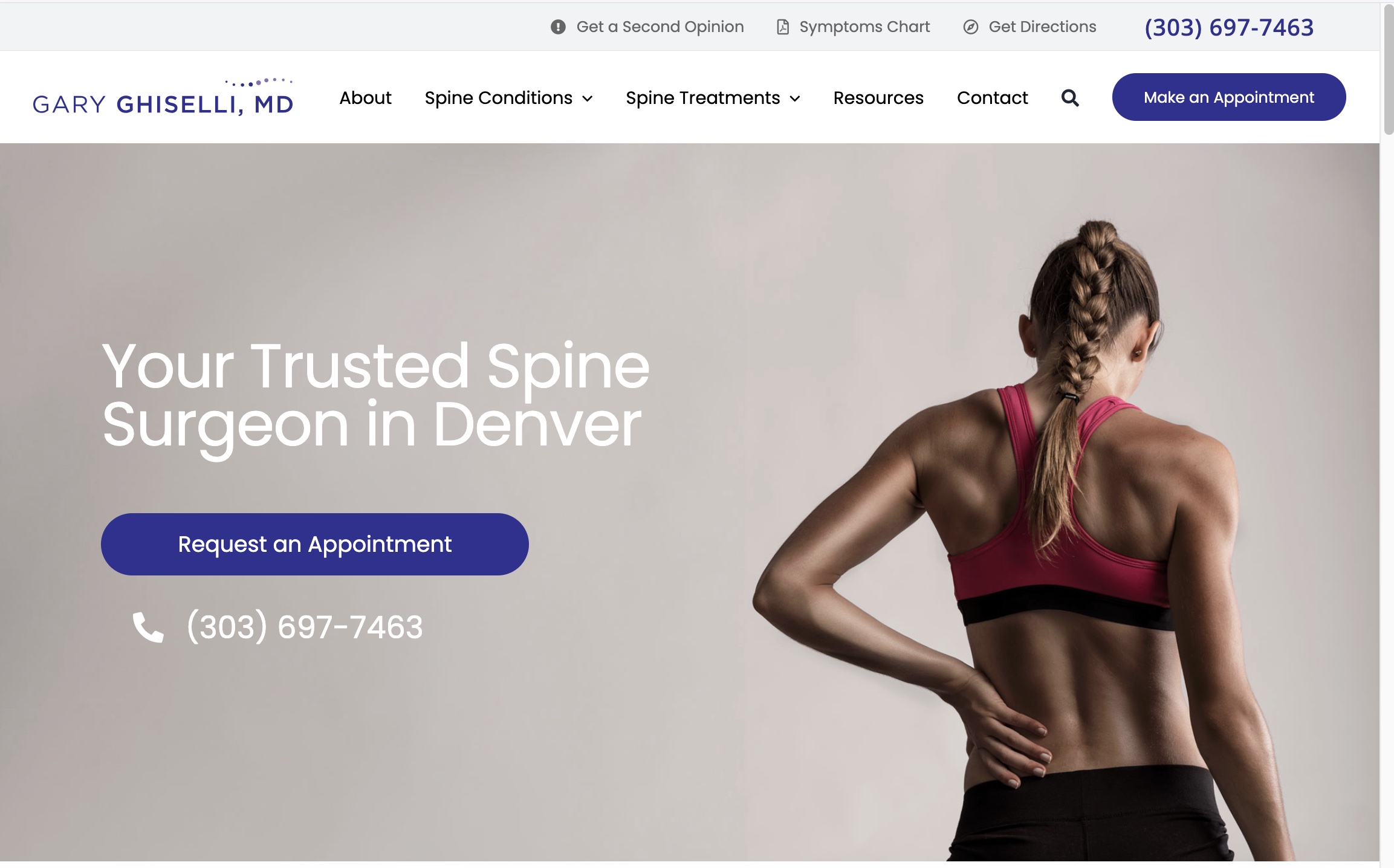
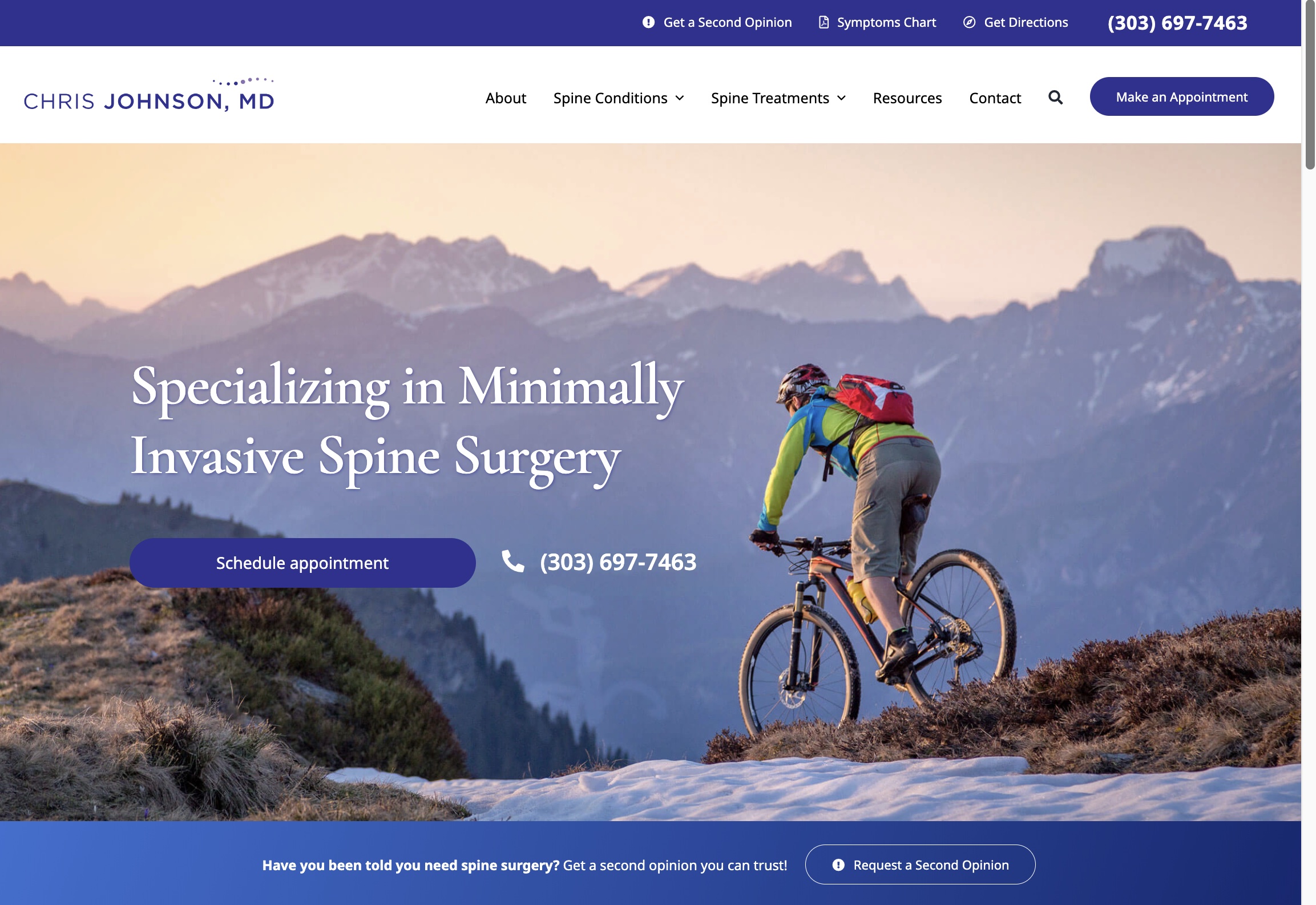
A group practice can do a better job of featuring a surgeon’s photo, bio and capabilities, along with the other members of the group. If the group is small, e.g. less than seven doctors with each having their own specialization niche, this can enable the prospective patient to find the best match for their problem. It’s easier for the small group practice to allow each doctor to subspecialize in their niche and promote that.
Larger group practices with more than 10 surgeons presents the political challenge of how to differentiate the partner specialists. Consequently, the patient has less help in this kind of site in identifying the most capable expert in the group. The larger group, like the hospital, has a political balancing act not to favor one surgeon over another.
Many surgeons within a group practice can feel like the group’s web site doesn’t really accomplish much for them, and have to spend money elsewhere to develop referrals that are connected to their name and expertise. But no outside promotion or Facebook ad campaign will be as low cost as a personal web site that appears in the top 10 on Google and other search engines.
Also the biggest issue is that most group practice web sites merely act as an electronic brochure, limited to listing locations, maps and doc bios, and offer little educational content about what causes various orthopedic or spine symptoms and the possible treatment options. Without that, the site won’t score in the top 10 on Google for prospective patient searches about what is causing symptoms.
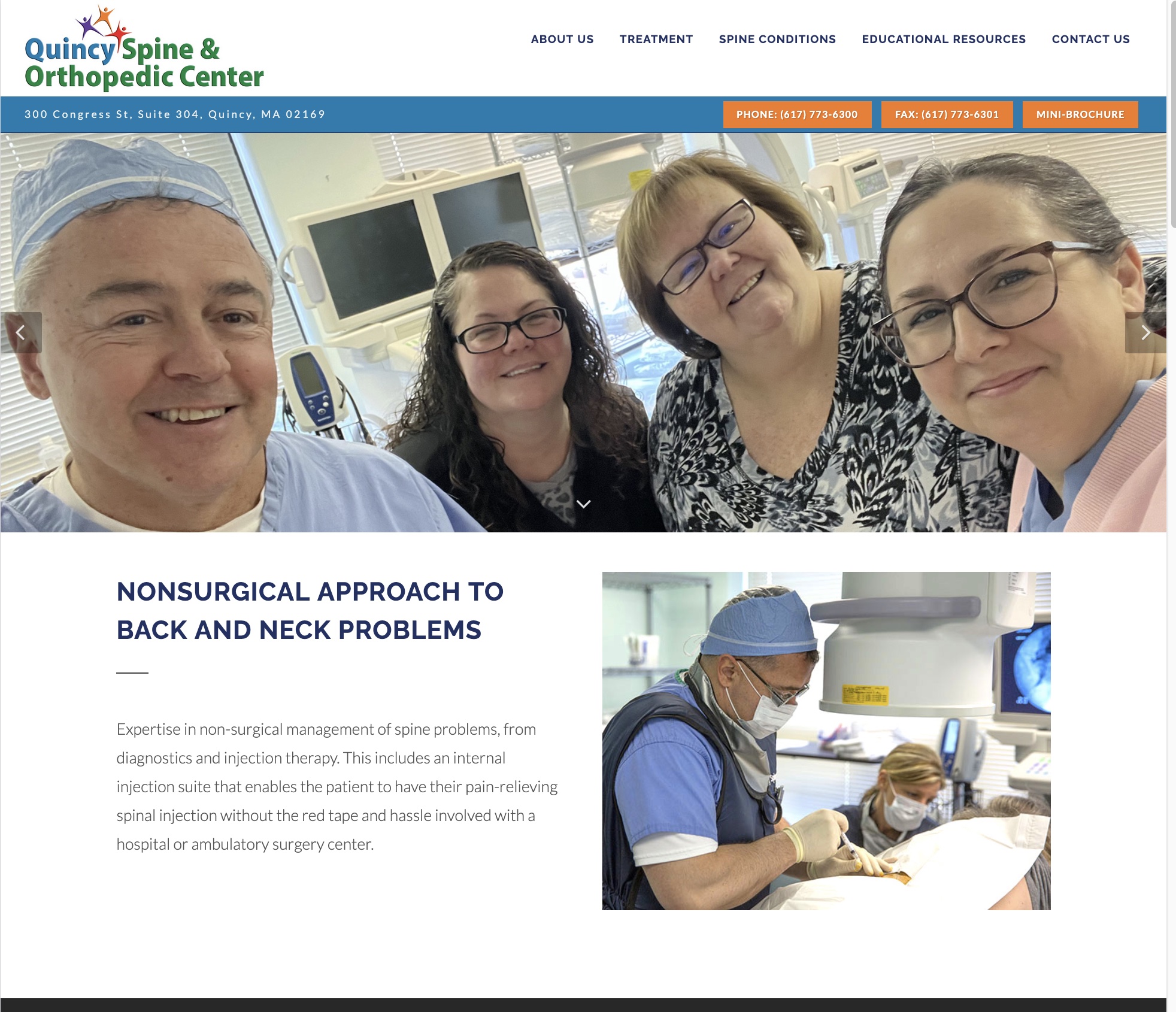
4. A personal web site benefits the specialist, the group practice and the hospital
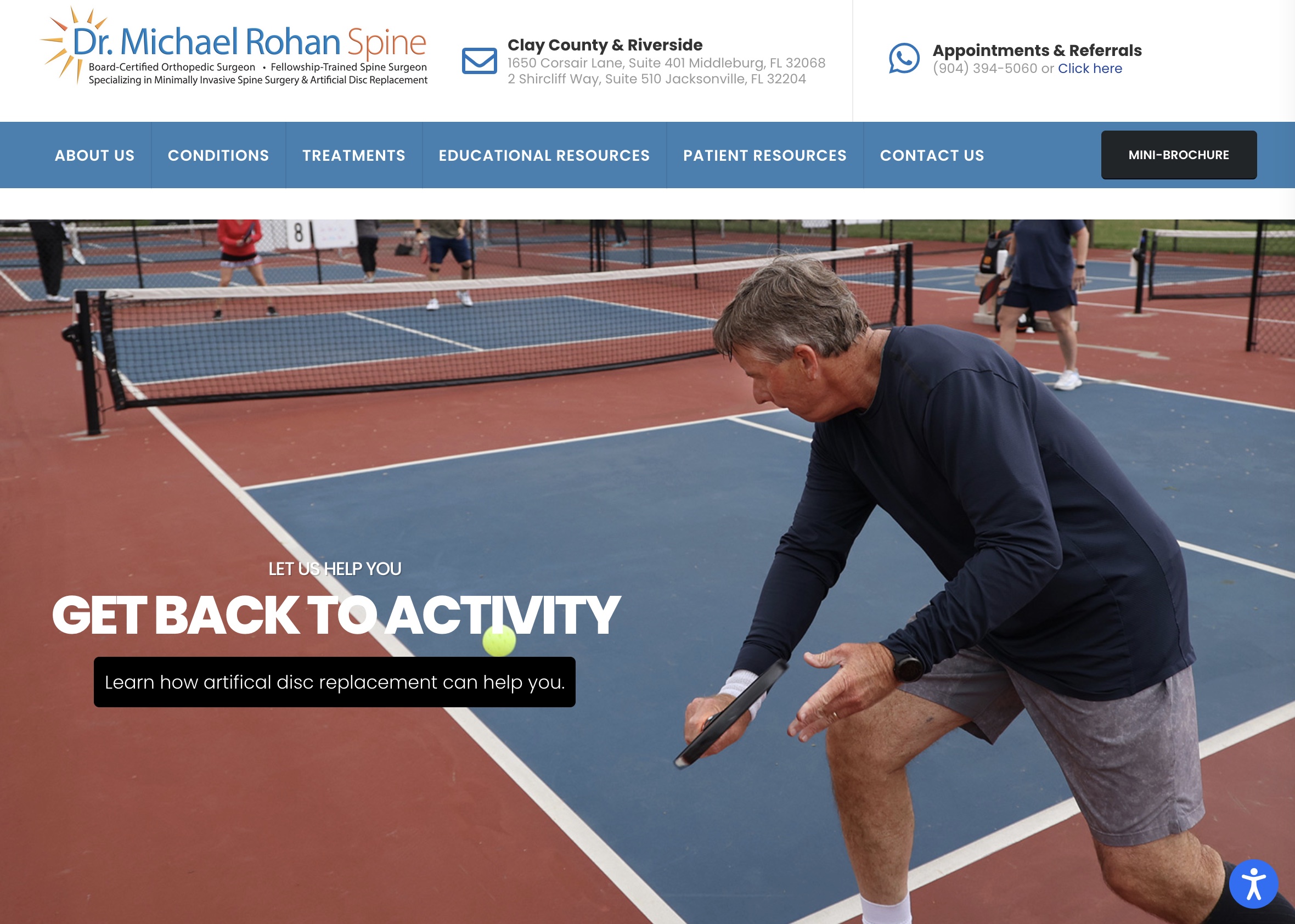
Ironically, an educational, content-rich personal web site benefits not just the doctor with increased patient flow, it benefits the group practice and hospital with increased productivity and collections. Some hospitals recognize this, and within the constraints put upon them, may try to offset some of the setup costs for a surgeon’s personal web site. From a hospital’s perspective a surgeon’s personal web site gets them off the political hook that prevents them from promoting a single surgeon in the region.
A group practice similarly benefits if several surgeons have personal web sites because it enable the group to have 5 web sites capture the first page of Google, which shoves the group’s competitor site off the first page into page 2. That’s a huge benefit. Also a huge problem for the competing group.
With a personal website, over time, the surgeon can develop a regional presence and a following among both consumers who refer by word-of-mouth to friends, but also with referral sources who also use the Internet to review capabilities of someone they might change their referral stream toward. If the site is done correctly, with educational content, it creates credibility.
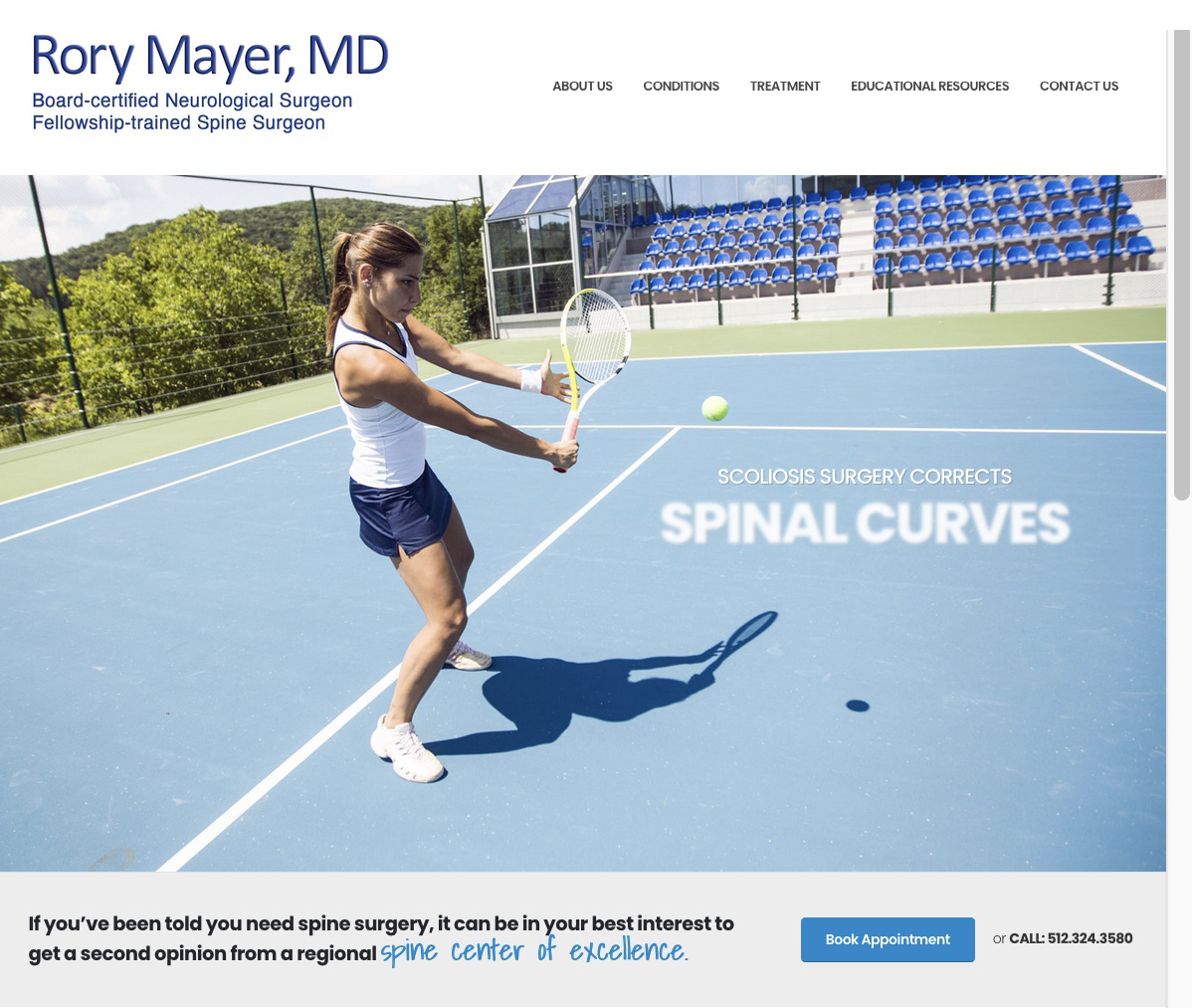

5. Addressing the cost of a personal web site
While the surgeon or specialist may have to pay the one-time cost of developing an educational web site that works, once it’s up and running the only recurring cost is the small hosting fee to keep the beacon on.
Some web companies will spread the cost of the setup of a personal website by charging a monthly fee to the physician’s Visa charge card. The problem with this approach, is that it is like leasing a car: the monthly charge never goes away and it acts as an ongoing drag and expense. So while that may be attractive at the beginning, it’s the most expensive way of buying a web site. Exact same reason why car dealers want you to lease the car (e.g. rent the car) rather than buy it. They want the monthly annuity. Just like the web company.
Prizm favors the approach of enabling the surgeon to pay the set up fee, and then the cost of the web site evaporates once it’s up and running. The only ongoing cost is a small hosting charge.
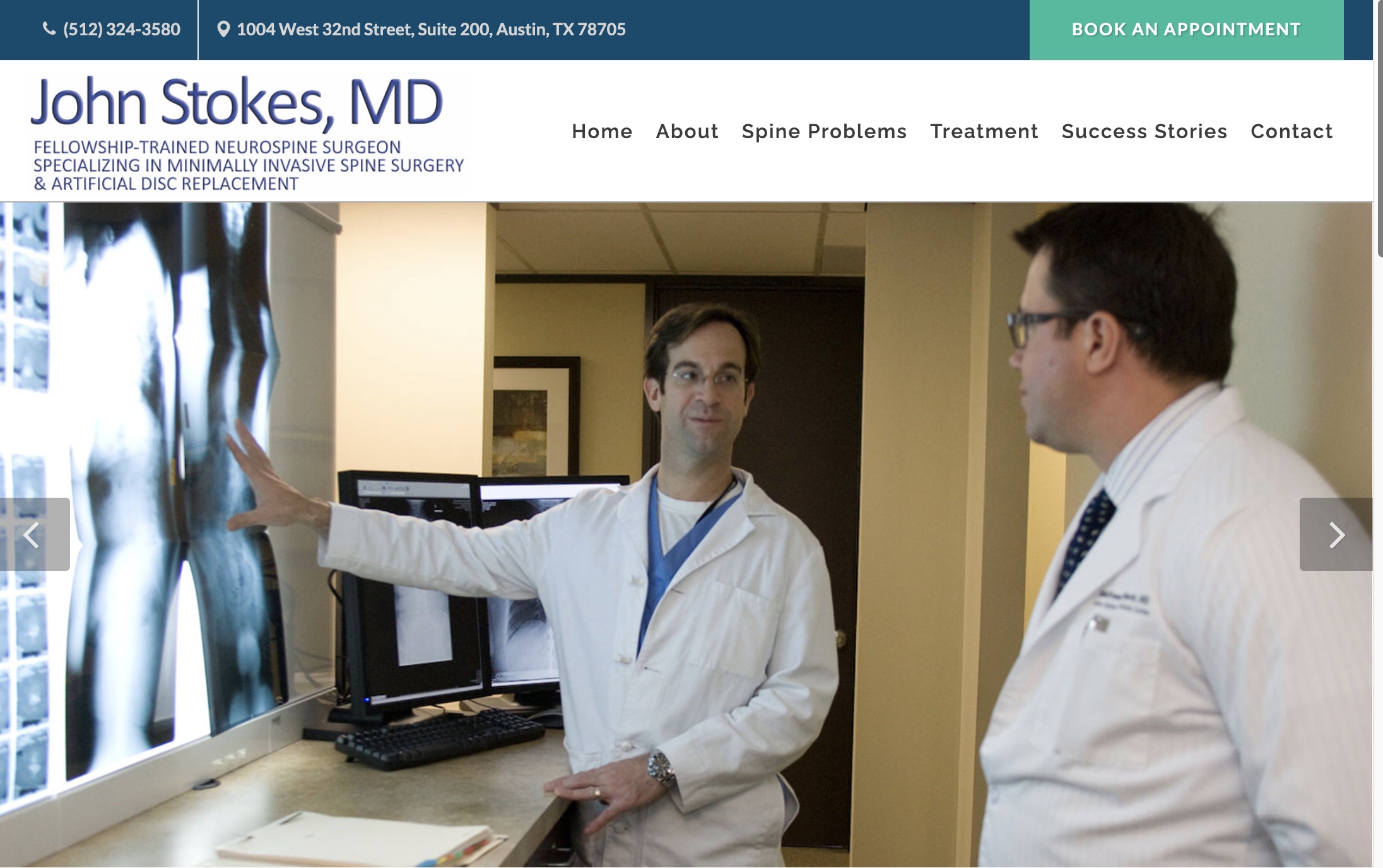
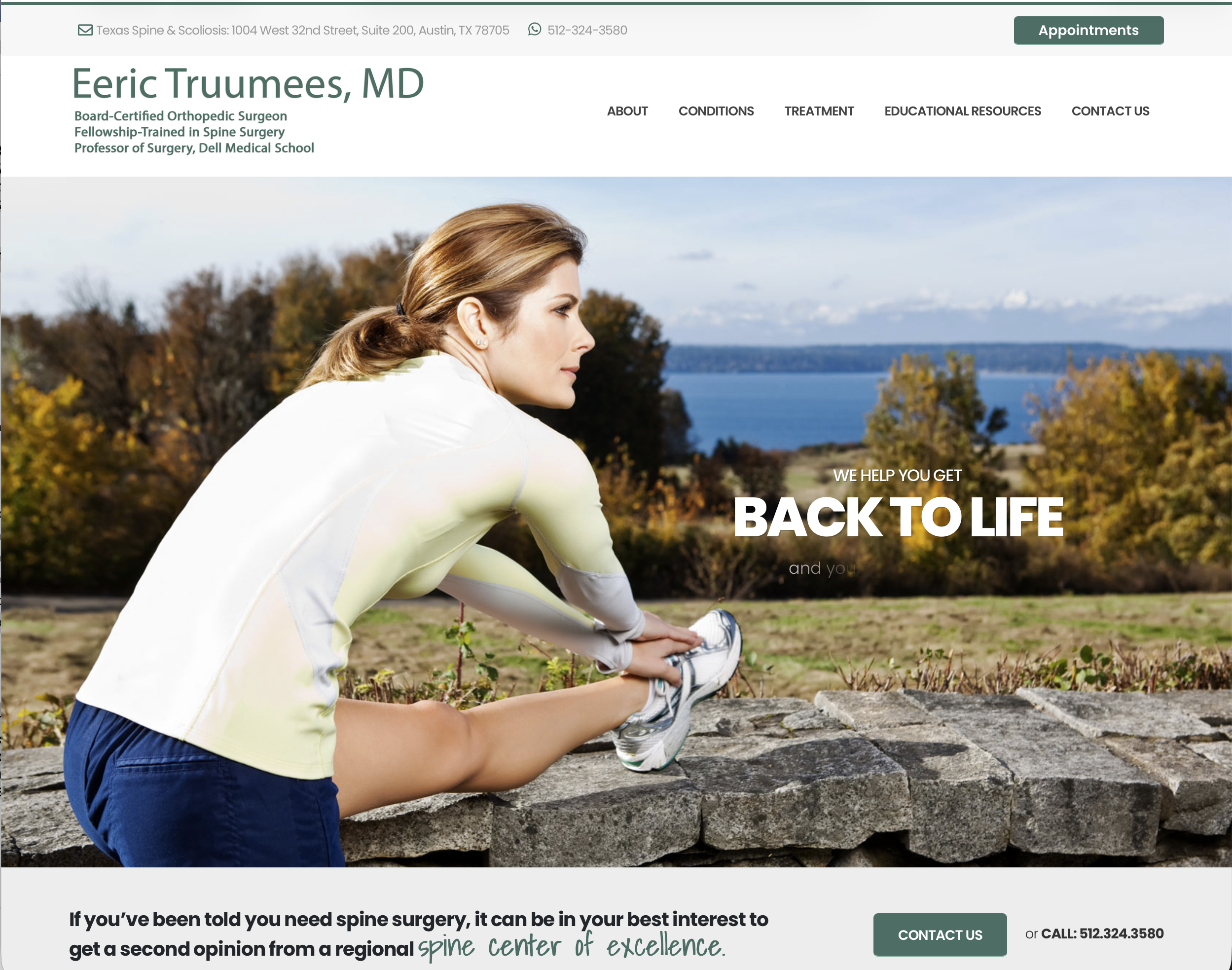
6. The devil is in the details on a healthcare web site
The real problem related to having a personal web site is finding a web company that is specialized 100% not only in healthcare, but in your respective niche. If you think the nearby propeller head can develop a personal web site that works, ask them to spell “spondylolisthesis” — and then explain what that is. Because that is the content you need in your site to get beyond being a worthless electronic brochure that never breaks into the top 100 on Google, let alone the top 10.
Unlike the propeller head, Prizm has authored several books on back pain, neck pain, knee pain and joint replacement that are on Amazon. All of this content is copyrighted intellectual property of Prizm that Prizm licenses to its client physicians.
An indicative sign of the value Prizm brings to the table is that most of our client physicians have been with Prizm for over 10 years, some for over 30 years that Prizm has been in business. Surgeons that may have started with Prizm 20 or 30 years ago, and are now retiring, often hand off their relationship to their junior partners of the groups that Prizm helped to build.
7. Prizm web sites bring Google credibility and ranking boost with inbound links
Prizm develops personal web sites that are filled with Prizm intellectual property and educational content that elbows the site into the top 10 on Google, Bing, Duck Duck Go and other search engines.
The web sites Prizm develops for spine surgeons, joint replacement surgeons and other specialists are content-rich and are viewed by Google to be credible sources of information on very specialized searches.
For example, for a scoliosis web site, we have intellectual property and educational content on everything from flatback syndrome, pediatric and adult scoliosis correction, vertebral tethering, kyphosis, spondylolisthesis, etc. Same for spine surgeons who specialize in minimally invasive spine surgery and artificial disc replacement. The sites we build for joint replacement surgeons showcase capabilities and advance robotic technology that can improve the clinical outcome.
Recognizing that consumers are looking for lists of regional specialty centers on spine care, orthopedics and joint replacement, 11 years ago Prizm created SpineCenterNetwork.com that lists spine centers across the United States on a map. Each year, SpineCenterNetwork.com produces press releases that are distributed on PR Newswire and are then picked up by more than 150 TV station, newspaper and magazine web sites. Because Google perceives the media as having great credibility, the links to SpineCenterNetwork.com — and all its member sites — are perceived to be highly credible. This raises the Google ranking of all related sites within SpineCenterNetwork.com. The same approach is used for the Prizm national networks CentersforArtificialDisc.com and JointReplacementNetwork.com.
8. Prizm sites capture multiple spots on the first page and are used in AI summaries
Because of the educational content on conditions, symptoms and treatments, AND the inbound links from SpineCenterNetwork.com, CentersforArtificialDisc.com and JointReplacementNetwork.com, Google attaches higher credibility to Prizm-developed web sites.
This is now extremely important as Google now provides an AI SUMMARY at the top of searches — even above paid “Sponsored Links”. When a Prizm site appears within an AI summary, it projects top credibility to the person searching for an expert in spine surgery, orthopedics or joint replacement.
9. Prizm sites create outmigration of cash-pay patients from Canada and Mexico
The typical wait for spine surgery in Canada is about two years. And the person has to get approvals from a labyrinth of PCP gatekeepers and screeners to even access a spine surgeon evaluation. So for the affluent Canadian with knee pain, herniated disc, hip pain etc. that wait for treatment can be unbearable.
Prizm sites, along with its three national networks SpineCenterNetwork.com, CentersforArtificialDisc.com and JointReplacementNetwork.com now appear in the Google ranking for searches for specialty care in Google Canada and Google Mexico.
So the more specialized your capabilities, the more a Prizm web site can attract patients from a statewide, regional or international market.
Disclaimer:
The pictures displayed in this website are images of physicians, patients and employees who have consented to have their pictures in this website.
RELATED TOPICS
Marketing Print Promotions Ad Campaigns Web Site Development Referral Development SystemsHAVE A QUESTION?

Wouldn’t it be convenient if someone created a listing of spine centers of excellence across the United States that all emphasize non-surgical treatment options before surgery?
Finally, there is a place.

Centers for Artificial Disc is the only verified national listing of spine centers that specialize in artificial disc replacement surgery.
CentersForArtificialDisc.com
Developing Centers of Excellence for Better Healthcare. All spine center development content is intellectual property of Prizm Development, Inc.
Prizm Development, Inc. | SpineCenterNetwork.com | SpineCenterJobs.com